

Finance: Drug and Bank Lords
Series: The banks and the “too big to jail” doctrine (part 3)
TOUSSAINT Eric
 The British bank HSBC, which employs 260, 000 people worldwide, is present in 75 countries, and claims to have 54 million customers [1] is another example of the “Too Big to Jail” phenomenon. [2] Over the last ten years, HSBC has laundered $881 million [3] for Mexican and Columbian drug cartels that are responsible for tens of thousands of firearm related assassinations. These relations continue in spite of dozens of warnings from different US government agencies including the Office of the Comptroller of the Currency. The profits from this business are so important that not only does HSBC continue, but it has also opened specialized services in its Mexico offices where drug dealers may simply hand in stocks of cash for cleaning. [4] It has been revealed that HSBC was accused of failing to respect regulations, to prevent money laundering, on nearly $700 billion of transfers and over $9.4 billion in US currency purchases from HSBC Mexico. The bank also violated sanctions against Iran, Sudan and Burma, amongst others. Although HSBC is openly contemptuous towards the law, it has hardly been subjected to any legal consequences. In December 2012, HSBC was condemned to a fine of $1.9 billion – about one week of revenue – as the full and final penalty for its money laundering activities. Although aiding and abetting terrorist organisations, and drug trafficking, are punishable by five years in prison not one director or employee has been criminally prosecuted. Bank directors have a free hand to take part in drug trafficking, sanction violations, or any other crime.
 In a comment on this [John Riddell's] website [1], Jara Handala raised a number of questions regarding the evolution of the Comintern's position on fascism, a topic touched on in my article Weighing the Legacy of Lenin's Comintern [2]. I do not know of any full treatment of this topic in English. I am therefore providing the summary account prepared for the introduction to my book on the Comintern's Fourth Congress, Toward the United Front [3] (Haymarket Books). This draft (Copyright © 2011, 2014 John Riddell) differs slightly from the final text in the book.
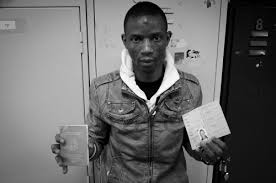 Toutefois, si contre toute attente, une décision négative, ou du moins ne nous donnant pas satisfaction (telle une « protection subsidiaire », ne lui offrant qu’un statut et un immunité au rabais et provisoire), devait être prise par le CGRA, il faudrait alors relancer la mobilisation politique et citoyenne pour appuyer les recours indispensables. Et d’abord sur le plan financier, le nerf de cette « guerre d’usure » : jusqu’à présent, son avocat a généreusement accepté de travailler gratis, même pas "pro deo", gardant cette possibilité pour ces éventuels recours, autrement coûteux que la phase actuelle de la procédure.
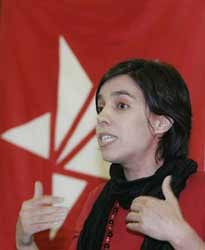 The regime is collapsing, it is dying and in its last-ditch struggle to survive, the king has abdicated. Never has the regime resulting from the Transition
 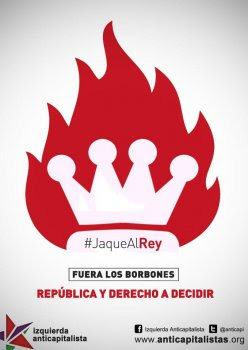 Se va el Rey Juan Carlos. El régimen del 78, el régimen de la monarquía corrupta trata de reciclarse, de colocar en la cabeza del Estado a un rey más joven, con menos lastre, pero que representa lo mismo: al régimen de la corrupción, de la miseria, de la falta de democracia.
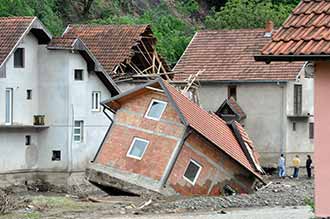 Since May 17, floods in the Balkans have taken a heavy toll with 17 deaths in Serbia, 27 in Bosnia and 2 in Croatia. Add to this disaster tens of thousands of displaced people and of homes without electricity, and enormous material damage. According to the political authorities, flooding on this scale has not been seen in the region for over a century. 40% of Bosnian territory has been devastated by floods. Damage is estimated at around 1.3 billion euros, the equivalent of 10% of the country’s GDP.
 Christine Daure-Serfaty est décédée à Paris, mercredi matin 28 mai dans sa quatre-vingt-huitième année. C'est une grande dame qui s'en va, une Juste qui avait fait de la résistance une évidence, vitalité essentielle en tout lieu et en toute époque. Pour le peuple marocain, dont elle avait épousé le destin, elle restera comme l'une des héroïnes de son inlassable combat pour les droits humains.
 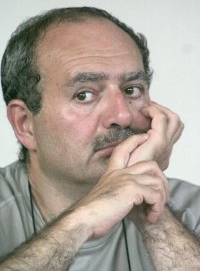 C'est une véritable secousse historique pour l'Europe et un énorme coup de tonnerre en France avec la victoire du Front national. Les résultats des élections européennes confirment la crise politique terrible qui frappe l'Europe. Il y a une onde de choc dont on ne peut encore mesurer tous les effets politiques. Bien sûr, il faut se garder d'une lecture française des résultats électoraux européens qui concernent 28 Etats : selon la situation politique de chaque pays, les rapports de forces peuvent varier, ici et là, mais de grandes tendances se dégagent néanmoins sur fond de crise et de dégradation de rapports de forces pour le mouvement ouvrier : abstention massive, poussée de l'extrême droite, recul de la droite traditionnelle, affaiblissement considérable de la social-démocratie, maintien de la gauche radicale avec une poussée de Syriza en Grèce et de Podemos en Espagne.
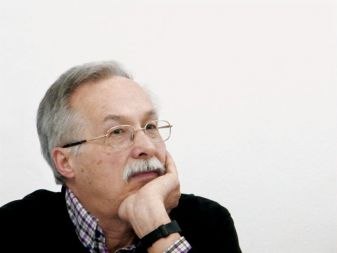 En dépit du fait que la participation s'est élevée à seulement 45,85%, les élections au Parlement européen se sont converties en premier test de l'évolution de la situation politique et sociale espagnole depuis que le Parti populaire (PP) a accédé au gouvernement [fin 2011]. Pour cette raison, bien qu'elles ne soient pas extrapolables à des élections générales
  Han pasado ya casi seis años casi desde el inicio "oficial" de la crisis con la quiebra de Lehman Brothers en septiembre de 2008. Cuatro desde el anuncio del primer gran paquete de recortes en mayo de 2010 por parte de Zapatero. Tres desde el estallido del 15M. Dos desde la gran manifestación independentista en Catalunya el 11S de 2012.
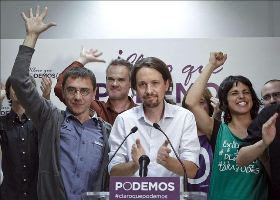 La diferencia entre el Frente Nacional y Podemos es el 15M. Y, por extensión, entre el ascenso de la barbarie xenófoba en casi toda Europa y la excepción parcial que afortunadamente tenemos por estos lares. "Parcial" porque el PP no tiene mucho que envidiarle al populismo xenófobo, machista, nacionalista y meapilas de la nueva derecha extrema ascendente europea. Pero excepción más que bienvenida, al fin y al cabo.
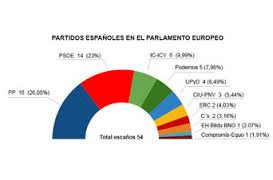
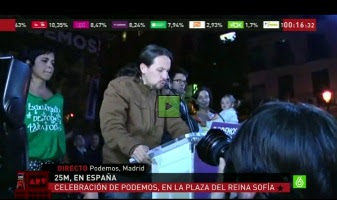 La larga onda del 15M ha entrado en su ciclo político. Hasta ahora las grandes sacudidas de la indignación habían sido esencialmente sociales: las calles, las Mareas o las grandes marchas por la Dignidad. Después de la jornada de ayer se puede afirmar con rotundidad que la indignación se ha empezado a transformar en respuesta política. La aparición de Podemos con 1.250.000 votos y la crisis de los dos partidos del sistema son los grandes hechos de las elecciones del 25 de Mayo.
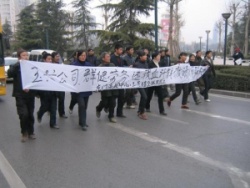 Green Left Weekly’s Peter Boyle spoke to Kevin Lin, who is doing research for his PhD at the University of Technology Sydney on the labour movement in China, about the background to a new wave of strikes in the country.
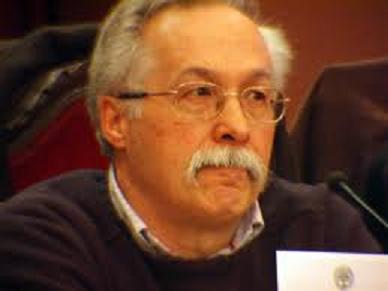 As we celebrate the third anniversary of 15M in different forums of reflection it has been possible to remember the events that gave rise to a new cycle of protests and with them to an "expansion of the field of the possible", recreating a broad and plural public space for political action other than the institutional sort. Thus was generated a broad relation of initiatives, arising in an increasing symbiosis between social networks, the plazas and the streets of so many places, with greater or lesser fortune, but all of them bringing to light the fact that something was changing in the landscape and the political climate, in contrast to the Newspeak of a regime bent on continuing installing in the minds of people the culture of cynicism, fear and resignation.
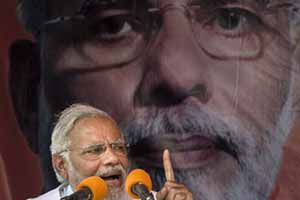 Narendra Modi and the BJP bludgeoned their way to election victory The sheer aggression of the BJP campaign, the threats to the Election Commission – Modi made sure India felt his presence.