

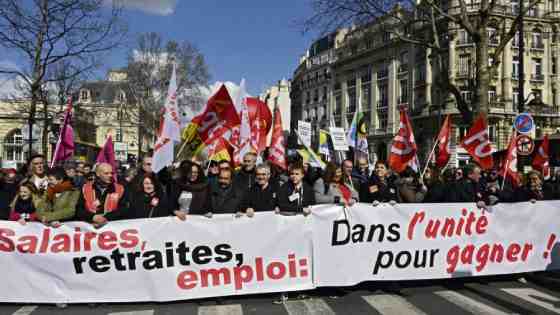
Communiqué (France) : Face à l’urgence sociale et écologique, construire une large convergence
par Alternative, Attac France, CGT, Confédération paysanne, Convergence services publics, EELV, Fondation Copernic, FSU, LFI-Nupes, MAN, NPA, Oxfam, PCF, UNEF, Union syndicale Solidaires
La hausse des prix rend de plus en plus difficile la vie quotidienne de la grande majorité de la population. Les mesures prises par le gouvernement aboutissent à une baisse des revenus réels, alors même que le patrimoine des plus riches et les dividendes versés aux actionnaires ne cessent de croître et que de nouveaux cadeaux fiscaux pour les employeurs sont déjà programmés. De plus, le gouvernement prévoit de nouvelles attaques frontales contre la protection sociale que ce soit sur la question des retraites ou sur l’assurance-chômage, et contre les services publics.
 À force d’abstraction, certain·es inventent une géopolitique dénuée d’êtres humains, et semblent, en particulier, oublier les Ukrainien·nes bombardé·es, massacré·es, déporté·es, réfugié·es et aussi résistant·es… C’est pourtant le présent et l’avenir des populations ukrainiennes qui devraient être au centre des politiques posées par le crime d’agression.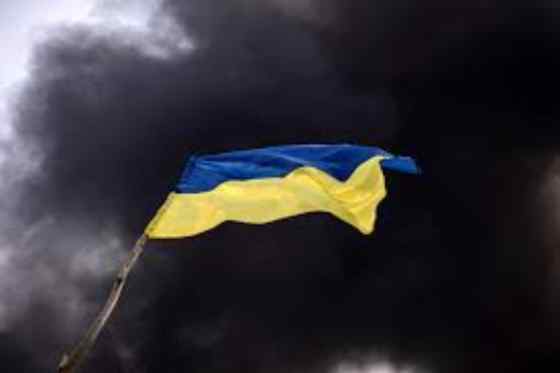
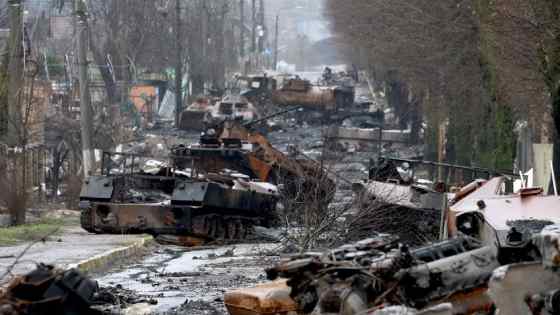
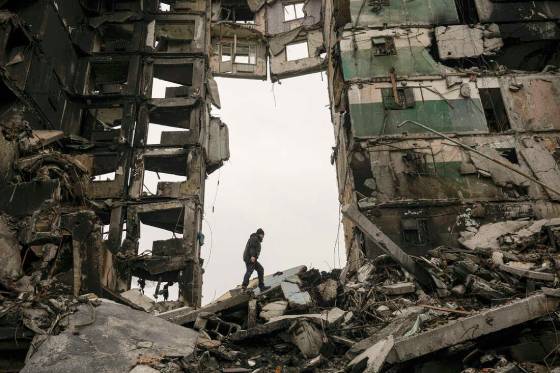
 On April 10 the World Bank updated its GDP prognosis for Ukraine to state that the Russian invasion was to shrink Ukraine’s economy by 45% in 2022 alone.[1] But that is a very optimistic prognosis. As by March 29th, the country’s direct one-time losses due to the invasion already exceed $1 trillion. Even prior to the invasions Ukraine already was one of the poorest and most indebted countries in Europe. Current budgetary expenditure on arms, humanitarian needs, and medical needs of the wounded have grown exponentially. That is why the IMF has already
 Abstract: Written in 1989, this article tells the true but unknown and dramatic story of Bolsheviks faced during the civil war with an unexpected national revolution of the oppressed Ukrainian people, the conflict-ridden relationships between Russian and Ukrainian communists and the great dilemma of what should be Ukraine: a part of the Soviet but, as in the imperial past, “one and indivisible” Russia or an independent Soviet state?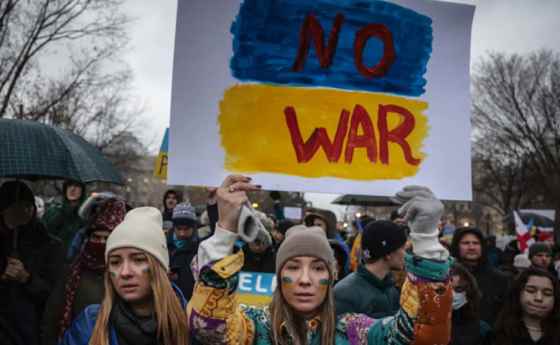
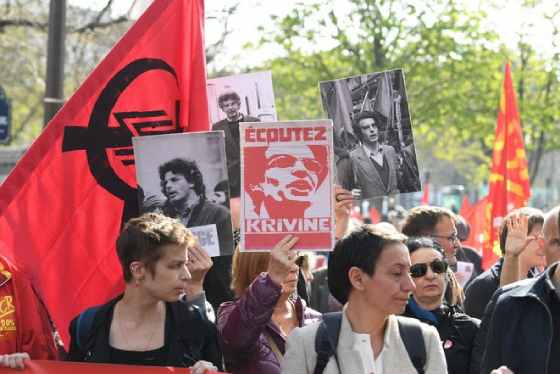 Obsèques d'Alain Krivine, à Paris, le 21 mars 2022. © Alain JOCARD / AFP
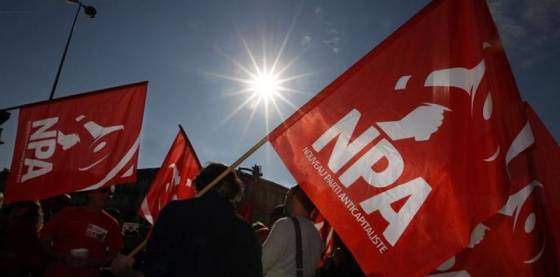
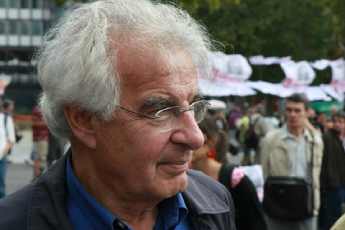 Notre camarade Alain Krivine nous a quittés aujourd’hui, à l’âge de 80 ans. Nous, camarades du NPA, nous associons à la douleur de sa famille, de ses proches, et de toutes celles et tous ceux qui se sont reconnus dans les combats qu’il a menés.
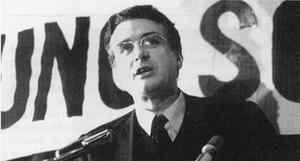 I want to go into the question of the resistance movement in Europe between 1940 and 1944 in detail. I want to do so especially because some comrades for whom I have respect, and whom I hope to see back in the Fourth International, the comrades of the Lutte Ouvrière group in France, have made it their special point of honour to raise this question against the Fourth International.